VicoHome: Smart Home Camera
- 4.5
- Rating
- 1.00M
- Installs
- Free
- Price

 Analysis by App-foxy
I usually become skeptical of smart-home camera apps after the first week. The initial setup can feel useful, but the real question is whether the app still earns a place on my phone after the novelty fades. VicoHome: Smart Home Camera made a better first impression than many basic camera companions because it is focused on connecting and controlling smart devices rather than trying to become a general video editor or social platform. I found the experience most convincing when I treated it as a quiet monitoring tool that I checked only when needed.
That distinction matters. VicoHome is a free app in the video players and editors category, developed by vicohome team, but its practical role is closer to a remote control and viewing hub for compatible smart-home devices. I would recommend it to someone who wants a straightforward way to keep an eye on a camera from a phone, especially if the person values convenience more than advanced surveillance administration. I would not recommend choosing it blindly for a complex multi-camera installation, because the quality of the experience depends heavily on how well the connected devices fit the app.
What the first week feels like
During the first few days, the appeal is easy to understand. Having a camera feed available from a phone changes the way I handle small household worries. Instead of walking to another room to check on a pet, a delivery area, or an empty space, I can open the app and look. That convenience is not dramatic, but it is exactly the kind of small reduction in friction that makes a smart-home app feel worthwhile.
You May Also Like

 Blood Strike: 2.5 Anniversary
Blood Strike’s Loadouts Turn Every Drop Into a Tactical Gamble
A close look at Blood Strike’s custom loadouts: how fast access to signature weapons reshapes its battle royale rhythm, rewards preparation, and narrows the gap between fights.

 Pandora - Music & Podcasts
Pandora’s Music Is Easy to Start, but Harder to Recover
Pandora’s strength is its low-effort path from a seed to a station. Its weak spot is how much confidence it asks you to place in connection, setup, and quiet recovery.

 8 Ball Pool
 Is Built on Rivalries, Rematches, and Routine
A close look at the rivalries, rematches, shared routines, and unanswered safety questions that turn a quick pool match into a persistent mobile community.

 Samsung Music
’s Quiet Strength Is Playing What You Already Own
Its reach comes less from spectacle than from dependable access to a personal library. That simplicity is both the app’s strongest retention engine and its ceiling.

 AccuWeather: Weather Radar
AccuWeather Review: A Quick, Clear Forecast for Everyday Decisions
For everyday plans, the best forecast is the one you can understand quickly. AccuWeather makes rain timing, radar, and local conditions easy to act on, with a few trade-offs.

 Hill Climb Racing
Why Hill Climb Racing Still Turns Crashes Into One More Run
A tiny car, a bumpy hill and one more upgrade: Hill Climb Racing keeps resurfacing because its simple chaos makes every near-miss feel personal.
More From Our News Desk
View All News


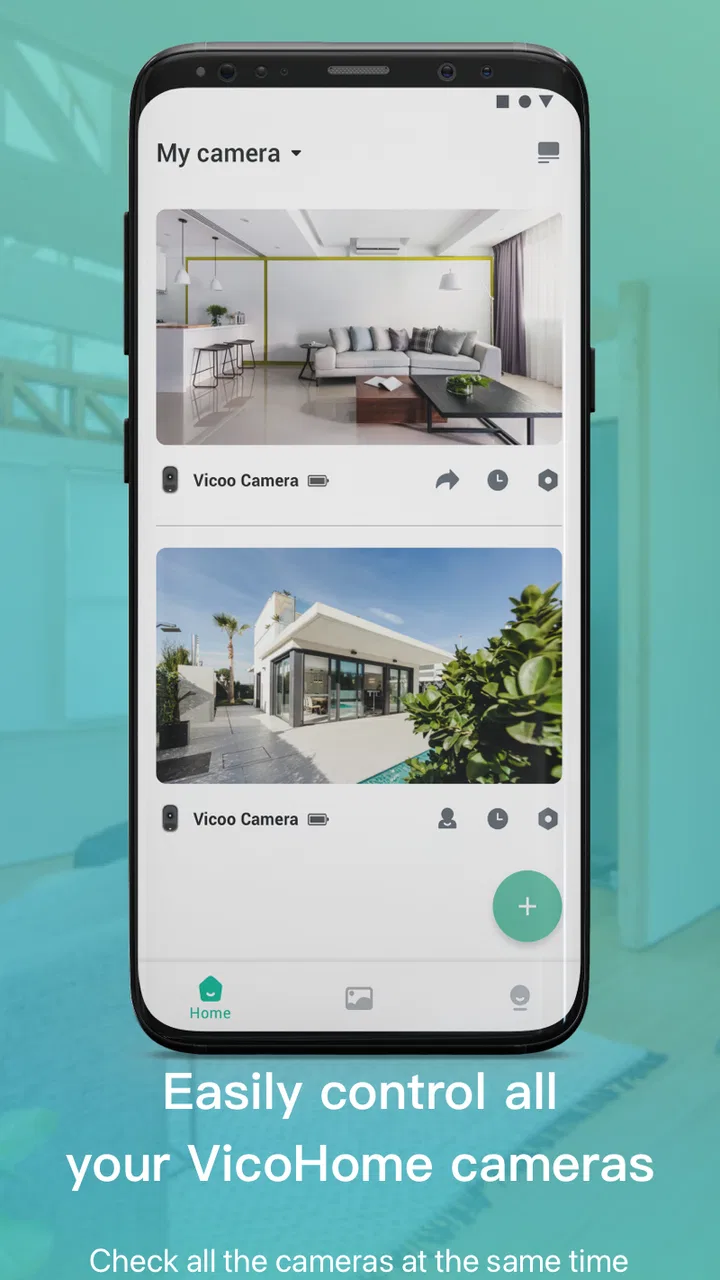
The app’s store summary promises easy connection and control of smart devices from anywhere, and that describes the intended experience without needing much explanation. In practice, the best part is the sense that the camera becomes part of an everyday routine rather than a separate gadget with its own isolated interface. I can imagine checking it before leaving home, looking in during a break, or confirming that everything is normal before going to sleep.
My advice for the first setup is to keep the arrangement simple. Start with one device, place it where the view is genuinely useful, and spend time learning how quickly the live view opens and how the controls behave. Adding several devices immediately can make it harder to tell whether a problem comes from the camera, the network, or the app. A single-camera trial gives a much clearer answer about whether VicoHome suits your habits.
One useful but easy-to-miss insight is that a camera app should be judged by the number of unnecessary checks it removes, not by how often you open it. If I have to keep reopening the app because the first view is confusing or because the device status is unclear, the convenience quickly disappears. VicoHome works best when it supports a short, purposeful check rather than encouraging constant monitoring.
The app is free to install, which makes that trial less risky. It is rated for Everyone, so it is positioned for ordinary household use rather than a specialist audience. Its current version is 2.81.0, and it runs on Android 7.0 or later. Those details make it accessible to people using older Android phones, although compatibility with the app itself does not guarantee that every connected camera will behave identically across devices.
The public response is encouraging: VicoHome has an average rating of 4.6 from around 41 thousand ratings, with more than four thousand written reviews and over one million installs. I see those figures as evidence that the basic concept works for a substantial audience, not as proof that every setup will be smooth. Smart-home reliability is affected by the camera model, home network, phone, and location, so a strong overall rating should be treated as a useful signal rather than a promise.
Where it fits in a normal household
I think the strongest use case is light supervision. A person might use it to check whether a child has returned home, glance at a pet’s usual room, or confirm that a front entrance looks undisturbed. These are not situations that require a professional security console. They require a view that is easy to reach and a control experience that does not demand technical knowledge every time.
For example, imagine leaving for work while a pet remains indoors. During the day, I would rather open one familiar app for a quick look than search through a complicated dashboard. If the pet is resting normally, I can close the app in seconds. That small workflow is where VicoHome has lasting potential: it turns a vague worry into a quick visual confirmation without requiring a full inspection of the home.
It can also suit someone who is gradually building a smart home. A dedicated camera app is often less intimidating than a broad automation platform filled with lights, sensors, routines, and device groups. VicoHome’s narrower focus may help a new user understand the basic relationship between a camera, the phone, and remote access before moving into more elaborate home-control systems.
On the other hand, I would be cautious if you need a single command center for products from many unrelated brands. A broad smart-home platform may be a better choice when your priority is combining cameras with lighting, locks, thermostats, alarms, and automated scenes. VicoHome makes more sense when its connected devices are already central to your setup, not when you are trying to replace every smart-home app with one universal solution.
Why it can remain useful after the novelty fades
I find that VicoHome is most likely to stay useful when it supports a small, repeatable task rather than becoming another screen to browse. Giving each camera a clear purpose—and checking that its view still answers the question you care about—can keep the routine focused without encouraging constant monitoring. That same practical lens also helps clarify how the app fits into everyday use.
Month-to-month value comes from routine, not entertainment
After the first month, the excitement of remote viewing usually disappears. That is not necessarily a weakness. A good utility app should become boring in the best possible way. I would keep VicoHome installed if it consistently lets me answer practical questions quickly: Is the room occupied? Did something change? Does the camera still show the area I care about? The value comes from dependable access, not from spending time inside the app.
This is where VicoHome needs to earn its space. A camera app that is opened only during setup has failed its long-term purpose, even if the first connection felt impressive. The app becomes more valuable when it is attached to a clear habit, such as checking the home before bed or looking at a pet during a long day away. The habit should be occasional and intentional; constant checking can create anxiety rather than reassurance.
I also prefer a routine that has a defined stopping point. Open the app, inspect the relevant view, make a decision, and close it. That approach prevents the camera from becoming a source of background stress. It also exposes whether the app is genuinely efficient. If a simple check turns into repeated loading, confusing navigation, or uncertainty about the device state, I would start looking for an alternative rather than forcing the habit.
A practical tip is to choose the camera’s purpose before deciding where it belongs. A device aimed at a doorway should answer a different question from one aimed at a pet’s sleeping area. If the camera is placed without a specific job, I am more likely to open VicoHome out of curiosity and less likely to find the view useful. Clear placement creates recurring value; novelty alone does not.
Another trade-off is that remote access encourages convenience but can also make the app feel more important than it really is. I would not rely on a phone view as the only response to a serious safety concern. For ordinary awareness, it is helpful. For professional security needs, emergency response, or strict monitoring requirements, I would want a more specialized system with clearly defined reliability and management features.
Maintenance is the hidden test
Every smart camera creates maintenance, even when the app itself looks simple. The camera needs to remain connected, the phone needs to remain compatible, and the viewing habit needs to survive changes in the home. VicoHome reduces some of the effort by placing device access in one app, but it cannot remove the basic responsibility of keeping the setup usable.
I would check the system occasionally rather than waiting for an important moment. A quick test can reveal whether the camera still appears, whether the live view opens, and whether the chosen location still makes sense. This is especially important if the camera has been moved, the home network has changed, or the phone has been replaced. A camera that worked perfectly during setup can become irrelevant if its view is blocked or its position no longer answers a real household need.
My preferred maintenance routine is deliberately small. I would test the view at a calm time, remove any device that is no longer useful, and avoid collecting cameras merely because adding them is easy. A smaller setup is easier to understand and less tiring to maintain. This is an important advantage of treating VicoHome as a practical tool rather than a dashboard that must display every possible device.
The in-app purchase range is broad, from $0.99 to $999.99 per item. That makes it especially important to pay attention before confirming any purchase. The free entry point is attractive, but the presence of optional purchases means I would review what an upgrade actually changes and whether it solves a problem I truly have. I would not pay simply to make the app feel more complete. The purchase should have a clear connection to my camera workflow.
That pricing range also changes who should approach the app cautiously. A casual user who only wants basic access should begin with the free experience and avoid assuming that every advanced option is necessary. A household managing a larger or more demanding setup may have different requirements, but it should compare the total cost and practical benefit with dedicated camera systems before committing.
What creates fatigue over time
The biggest source of fatigue in any camera app is uncertainty. If I cannot tell whether the camera is available, whether the displayed image is current, or whether a control has taken effect, I lose confidence quickly. VicoHome’s long-term success therefore depends less on how attractive the first screen looks and more on whether the app makes the status of a device understandable during ordinary use.
Another source of tiredness is duplicated attention. If a camera already has a separate manufacturer app, a general smart-home platform, and VicoHome, I may end up checking the same device in several places. That is not automatically a fault of VicoHome, but it is a real ownership problem. I would choose one primary app for daily use and keep the others only when they provide a function I genuinely need.
Notifications can also affect whether the app remains welcome. I prefer alerts that lead to a clear action, not a constant stream of interruptions. If the setup produces too many events, I would adjust the camera’s placement or notification behavior where possible rather than allowing the phone to become a permanent alarm panel. The most useful camera is one that helps me notice meaningful changes without demanding attention all day.
Privacy is another reason to be deliberate. A camera pointed at a shared living space affects everyone in the home, not just the person who installed the app. I would discuss where it is placed, when it is appropriate to view it, and who should have access. VicoHome can be convenient for household awareness, but convenience should not replace consent or common sense. A camera aimed at a private area is a poor choice regardless of how easy the app is to use.
How it compares with familiar alternatives
Compared with using a camera manufacturer’s own app, VicoHome’s appeal is the possibility of a more focused smart-device experience. The manufacturer app may be preferable when it exposes every setting for one specific camera, while VicoHome may feel more natural when the user wants a central place for compatible devices. The better option depends on whether I value depth for one product or simplicity across the devices that VicoHome supports.
Compared with a general smart-home platform, VicoHome is less likely to be the right choice for someone building elaborate automations around many kinds of equipment. A broad platform can be more suitable for combining cameras with household routines. VicoHome is more attractive when the camera itself is the center of attention and I want to avoid a large control panel filled with unrelated features.
Compared with a professional security system, the difference is even clearer. A consumer camera app is convenient for checking familiar places, but professional users may need formal monitoring, detailed administration, and a more structured security workflow. I would not choose VicoHome merely because it is easy to install if the actual requirement is business-grade surveillance or a carefully managed multi-location operation.
One non-obvious advantage of a focused app is psychological: fewer controls can make it easier to build a reliable habit. I am less likely to postpone a quick check when the app feels like a simple window into the home rather than a control room. The disadvantage is that simplicity can become limiting once my needs grow. VicoHome is strongest while the problem remains “let me see and manage my compatible smart devices,” not “let me design an entire security infrastructure.”
Who should keep it installed
I would keep VicoHome on my phone if I owned compatible smart cameras and wanted a low-friction way to check them from ordinary locations. It suits people who prefer a direct viewing routine, households that are beginning with smart devices, and anyone who values a quick visual confirmation more than a long list of specialist controls. The free starting point makes it reasonable to test without immediately making a financial commitment.
I would skip it if I do not own compatible devices, because the app’s usefulness is tied to the hardware it connects to. I would also look elsewhere if I need deep camera configuration, a universal platform for many brands, or professional security management. In those cases, a manufacturer-specific tool or a broader smart-home system may offer a better match.
For everyone else, the decision should come down to a simple experiment: can VicoHome answer one recurring household question faster than the alternative I use now? If it can, the app has a reason to stay. If it only feels interesting during the first setup and then becomes another neglected icon, the novelty has already ended.
My long-term verdict is positive but measured. VicoHome: Smart Home Camera is not valuable because it promises to transform the home; it is valuable when it quietly removes a small piece of daily uncertainty. Its 4.6 average and more than one million installs suggest that many users find that basic role worthwhile, while the free availability lowers the barrier to trying it. Still, I would judge it by reliability, device fit, and maintenance effort rather than popularity alone.
The lasting value is a dependable habit, not constant surveillance. If your compatible camera has a clear purpose and you want a straightforward way to check it, I think VicoHome deserves a trial. If your needs are broader, more technical, or more security-critical, choose the alternative that matches those requirements instead of expecting one focused app to cover everything.
FAQs for VicoHome: Smart Home Camera
01What features does VicoHome offer for home security?
VicoHome provides a range of features designed to enhance home security, including live HD video streaming, motion detection alerts, night vision, and two-way audio. Users can monitor their home in real-time, receive instant notifications on their mobile devices if any unusual activity is detected, and communicate directly through the camera. These features make it a comprehensive solution for both security and convenience.
02Is VicoHome compatible with other smart home devices?
Yes, VicoHome is compatible with various smart home ecosystems, allowing seamless integration with other devices. This compatibility enables users to create automated routines, such as turning on smart lights when motion is detected. However, it's important to verify specific compatibility with your current smart home setup to ensure optimal performance.
03How does VicoHome handle data privacy and security?
VicoHome prioritizes user privacy and data security by employing encryption protocols to protect video streams and stored footage. Users can expect secure access to their data through password protection and two-factor authentication. It's advisable to regularly update the app and firmware to maintain the highest security standards and protect against potential vulnerabilities.
04What are the subscription options for cloud storage?
VicoHome offers several subscription plans for cloud storage, allowing users to choose based on their needs. Options typically range from free plans with limited storage to premium plans offering extended recording history and additional features. Users should compare these plans to assess which best suits their requirements for video storage and retrieval.
05Can I access VicoHome on multiple devices simultaneously?
Yes, VicoHome supports multi-device access, allowing users to log in from several devices at once. This feature is particularly useful for families or households where multiple people need access to the camera feed. However, it's important to manage access permissions to ensure security and privacy are maintained across all devices.
Pros
- User-friendly interface for easy navigation.
- Seamless real-time video streaming.
- Multiple camera support for comprehensive monitoring.
- Customizable motion detection alerts.
- Secure cloud storage options.
Cons
- Limited free storage capacity.
- Occasional connectivity issues.
- Subscription required for advanced features.
- App notifications can be inconsistent.
- Setup can be confusing for beginners.

VicoHome: Smart Home Camera
Gallery